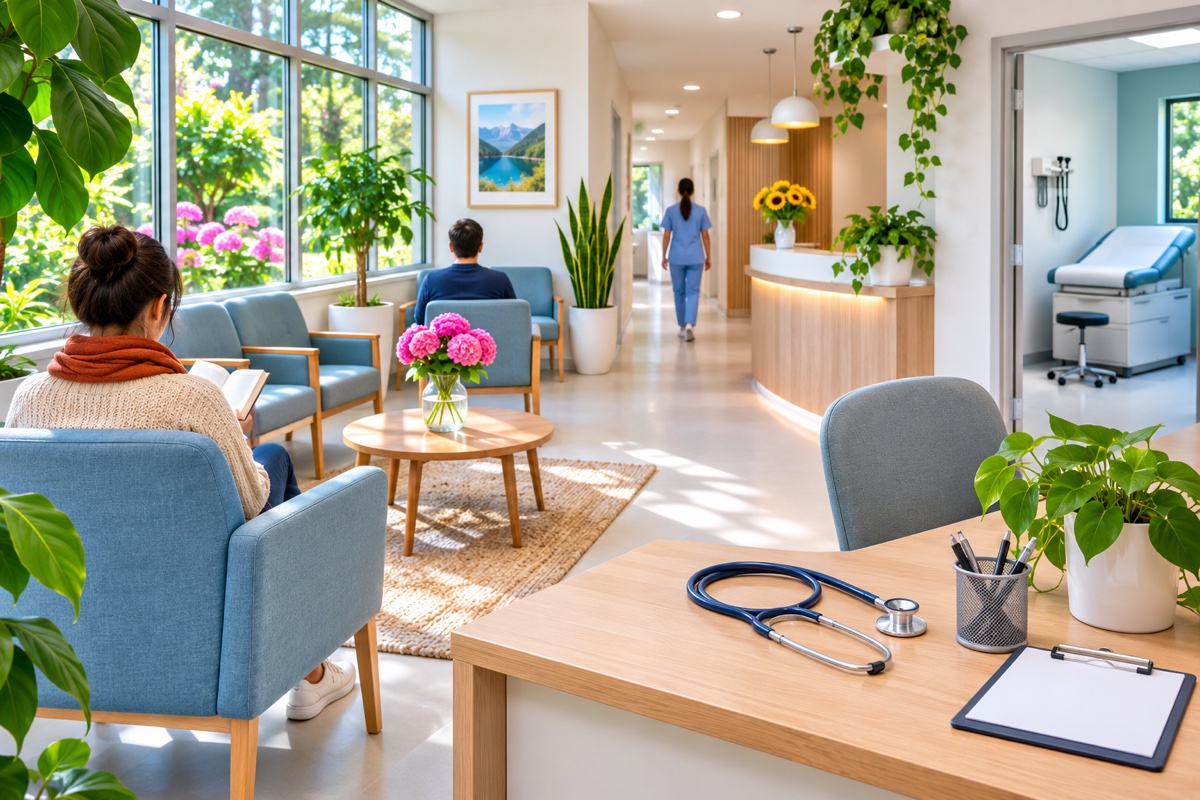
If you get sick in Seoul, a small local clinic is usually the fastest place to see a doctor.
For everyday problems such as a fever, ear infection or stomach bug, walk into a neighborhood clinic with your passport and pay by card, while large hospitals and their international clinics are for serious or complex care; for emergencies, call 119.
The Korea Travel Hotline, 1330, can help with interpretation and finding medical services around the clock.
As a family in Seoul, we have been to clinics more times than we can count, mostly with kids at odd hours.
Here is how the system works for a visitor.
This is general information, not medical advice.
Where should a tourist go first: a clinic or a hospital?
Korea has a lot of small, specialized clinics, called uiwon (의원), often several in one building.
You walk in, register at the front desk, wait a short time and see a doctor.
Large university hospitals are excellent, but for minor illnesses they are slower, cost more, and some departments expect a referral.
| Where | Best for | What to expect |
| Neighborhood clinic (의원) | Colds, fever, stomach problems, minor injuries | Short wait, quick visit |
| Pediatric clinic (소아청소년과) | Children's illnesses | Busy in the morning and in winter |
| International clinic at a large hospital | Complex problems, English support | Appointment advised, higher cost |
| Emergency room (응급실) | Serious illness or injury | Triage, can be a long wait for minor issues |
Clinics are named by specialty.
Internal medicine (내과, naegwa) is the usual choice for colds and stomach issues.
Ear, nose and throat (이비인후과) is very common for sore throats and sinus problems.
Orthopedics (정형외과) for sprains.
Dermatology (피부과) for skin problems.
What do I need to bring to a clinic?
Your passport, a card or cash, and a list of any medicines you take.
The front desk registers you with your passport details.
If you have travel insurance, ask for a receipt and a detailed statement of treatment, which many insurers require for claims.
Ask for it in English if you can; larger clinics often provide one.
How does payment work without Korean insurance?
Visitors without Korean national health insurance pay the full cost themselves.
For a simple clinic visit, this is usually manageable, but costs differ by clinic and treatment, so ask at the desk if you are worried.
Tests, injections and scans add to the bill.
You pay at the front desk after seeing the doctor, then take your prescription to a pharmacy and pay there separately.
Travel insurance is worth having for anything bigger.
Do doctors in Seoul speak English?
Many Korean doctors read and understand medical English well, because medical training uses English terms.
Spoken English varies.
In central Seoul and around foreigner-heavy areas, it is usually workable.
A translation app helps with the front desk.
For anything important, call 1330 and ask for interpretation.
What numbers should I know?
| Number | What it is | Notes |
| 119 | Fire and ambulance emergencies | Free ambulance for emergencies, interpretation available |
| 112 | Police | For crime, lost children, accidents |
| 1330 | Korea Travel Hotline | 24 hours, several languages, tourist help and interpretation |
Save these in your phone before the trip.
In an emergency, someone nearby will usually help call, and Korean emergency services handle foreign callers every day.
What about weekends and nights?
Many clinics open on Saturday mornings.
Some clinics, especially pediatric clinics in busy neighborhoods, stay open late on weekdays or open on Sundays and holidays.
Search for clinics «open now» on Naver Map or KakaoMap.
For nights and holidays when nothing is open, emergency rooms at hospitals are the option, but expect a wait if the problem is not urgent.
How do I get a prescription filled?
After the visit, the clinic gives you a prescription.
Take it to any pharmacy, usually the one on the ground floor of the same building.
The pharmacist prepares the medicine, often in small paper packets with each dose sorted for you.
Ask them to explain the dosing; they are used to it.
What did we learn from clinic visits with kids?
Go early.
Pediatric clinics are packed in winter, and some take registrations by app before opening.
Bring something for the child to do while waiting.
And keep your passport, or a photo of it, on you while traveling, because you need it at registration.
What does a typical clinic visit look like?
Here is a visit from start to finish, the way it went when a friend staying with us got an ear infection.
1. We searched Naver Map for 이비인후과 (ENT clinic) open now, and found one two subway stops away.
2. At the front desk, she showed her passport and filled in a short form. The staff used a translation app for a couple of questions.
3. After a short wait, the doctor looked at her ear, explained in simple English and wrote a prescription.
4. She paid at the desk by card and got a receipt.
5. Downstairs, the pharmacy filled the prescription in a few minutes.
The whole thing took less than an hour.
Useful Korean phrases at a clinic
| English | Korean | How to say it |
| I am a tourist | 여행객이에요 | yeohaenggaegieyo |
| I don't have Korean insurance | 한국 보험이 없어요 | hanguk boheomi eopseoyo |
| It hurts here | 여기가 아파요 | yeogiga apayo |
| Since yesterday | 어제부터요 | eojebuteoyo |
| English receipt, please | 영문 영수증 주세요 | yeongmun yeongsujeung juseyo |
What if I need a dentist?
Dental clinics (치과, chigwa) are as common as medical clinics in Seoul.
For a lost filling or toothache, a neighborhood dental clinic can usually see you the same day or the next.
Ask for the cost before treatment, as dental work for visitors is paid in full and can vary a lot.
What about mental health or chronic conditions?
If you take regular medicine, bring enough for the whole trip in original packaging, with a copy of your prescription.
Some medicines need a doctor's note to bring into Korea, so check the Korea Customs Service rules before you fly.
Large hospitals' international clinics can help with ongoing conditions and arrange specialists if needed.
Should I buy travel insurance for Korea?
We always tell visiting family yes.
A simple clinic visit is manageable to pay yourself, but an emergency room visit, scans or a hospital stay can be expensive for someone without Korean insurance.
Check that your policy covers outpatient visits and medicines, not only hospital stays, and keep every receipt and statement from the clinic and pharmacy.
Claims are much easier with English documents, so ask for them at the desk before you leave.
Frequently asked questions
Can tourists see a doctor in Korea without insurance?
Yes. You pay the full cost yourself, and you can claim it from your travel insurance later.
What is the emergency number in Korea?
119 for ambulance and fire, 112 for police.
Do I need an appointment at a Korean clinic?
Usually not. Most neighborhood clinics take walk-ins. Large hospitals and international clinics recommend booking.
Where can I get help in English?
Call 1330, the Korea Travel Hotline, which runs 24 hours and can interpret for you.
If you end up staying longer in Korea and living on your own, MARU's piece on why more than a third of Korean homes have one person shows what daily life looks like.
Sources: Korea Tourism Organization, 1330 Korea Travel Hotline (english.visitkorea.or.kr); National Fire Agency 119 (nfa.go.kr); Korea Health Industry Development Institute, Medical Korea (medicalkorea.or.kr).
'Health Insurance' 카테고리의 다른 글
| Korean Pharmacy Cold Medicine Names: What to Ask For in Seoul (0) | 2026.11.06 |
|---|
