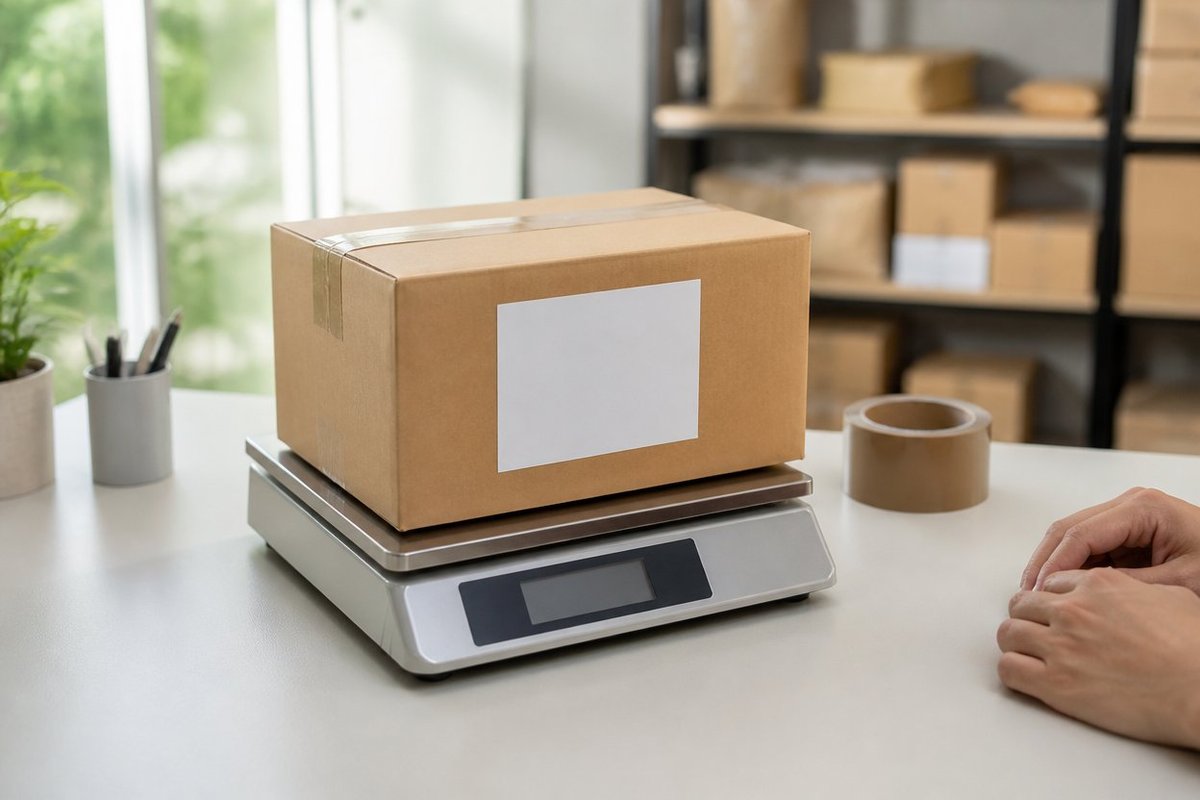
Sooner or later you will need to send something inside Korea: a sold textbook, a borrowed charger, a box of winter clothes to a friend in Busan.
The two easy ways to send a domestic parcel are the post office, where a registered parcel up to 3 kg costs 4,000 won at the counter, and the parcel kiosk in a CU or GS25 convenience store, where GS25's store-to-store half-price service starts at 1,900 won, as of November 2026.
Door-to-door delivery in Korea usually takes one or two days.
Our family sends parcels most months, and the method we pick depends on the size of the box and whether the other person is home during the day.
Rates change, so check the official page before you pack.
What are my options for sending a parcel in Korea?
Parcel delivery is called taekbae (택배).
There are three practical routes for an individual sender.
| Method | Where | Good for | Watch out for |
| Post office counter | Any post office, weekdays | Reliable tracking, heavier boxes, staff who can help | Closed on weekends at most branches |
| Post office pickup | Booked online, a postal worker collects | Heavy boxes you cannot carry | Costs more than the counter |
| Convenience store parcel | CU and GS25 kiosks, open late | Small boxes, evenings and weekends | Weight limits and Korean-only screens |
| Store-to-store half-price service | GS25 to GS25, CU to CU | Cheapest for small items | The recipient must collect at a store |
Private courier companies also collect from homes, but they are set up for online shops more than for one-off senders.
How much does the post office charge for a domestic parcel?
Korea Post prices a parcel by weight and by size, measured as the sum of length, width and height.
Whichever puts the box in the higher tier decides the price.
These are the counter rates for a registered parcel with next-day delivery on the mainland.
| Weight up to | Registered parcel at the counter (as of November 2026) |
| 3 kg | 4,000 won |
| 5 kg | 4,500 won |
| 7 kg | 5,000 won |
| 10 kg | 6,000 won |
| 15 kg | 7,000 won |
| 20 kg | 8,000 won |
| 25 kg | 11,000 won |
| 30 kg | 13,000 won |
The lowest tier also requires the three sides to add up to 80 cm or less.
A light item in an oversized box moves up a tier, so choose a box that fits.
The maximum is 30 kg and 160 cm in total, with no single side over 100 cm, and the minimum is 35 cm in total.
Korea Post also sells an ordinary parcel service that is cheaper, from 2,700 won for 3 kg, with delivery in about three days.
It has no tracking record and no compensation if it is lost.
For anything you would be upset to lose, pay for the registered service.
Pickup from your door costs more: 5,000 won up to 5 kg, 8,000 won up to 10 kg, 10,000 won up to 20 kg and 14,000 won up to 30 kg.
Parcels to and from Jeju follow a separate schedule and price line.
How do I send a parcel at the post office?
Pack and seal the box before you go, or buy a box at the counter.
Fill in the address slip, or type the details into the self-service screen if the branch has one.
You need the recipient's name, phone number and full address, plus your own.
Hand the box over, and the clerk weighs and measures it.
Pay by card or cash and keep the receipt, which carries the tracking number.
You can track the parcel on the Korea Post website with that number.
Post offices keep weekday office hours, so check your branch's closing time on the Korea Post site.
How does convenience store parcel delivery work?
CU and GS25 stores have a small self-service parcel machine near the counter, with a scale and a label printer.
You can enter the details on the machine, or book first in the parcel app and scan a code at the store.
Booking in the app is easier, because you can type addresses at home.
Place the box on the scale, confirm the price, and print the waybill.
Stick the larger label on the box and keep the customer copy.
Pay at the counter, and leave the box in the parcel area the staff point to.
A courier usually collects from the store once a day, so a parcel dropped off in the evening starts moving the next day.
Ordinary convenience store parcels go to the recipient's door, priced by weight, and the store's site lists the current weight limits and rates.
The stores themselves are worth knowing well, and MARU explains their place in daily life in its piece on Korean convenience stores.
What is half-price delivery, and when should I use it?
Half-price delivery, banggap taekbae (반값택배), is GS25's store-to-store service.
You drop the parcel at one GS25 and the recipient picks it up at another GS25 that they choose.
It uses the chain's own delivery trucks, which is why it is cheap.
| Weight | GS25 half-price delivery, mainland to mainland (as of November 2026) |
| Up to 500 g | 1,900 won |
| Up to 1 kg | 2,300 won |
| Up to 5 kg | 2,700 won |
The service takes longer than door delivery, with GS25 stating arrival within four days including the day of drop-off.
It is limited to items of modest value and is paid in advance.
Routes involving Jeju and the islands cost more.
CU runs a similar store-to-store service, with prices listed on its parcel site.
This is the method students use for secondhand sales, since neither side has to give out a home address.
The recipient gets a message when the parcel arrives and shows it at the counter to collect.
How do I write a Korean address on a parcel?
Korean addresses run from large to small: city or province, district, road name and building number, then building name and unit.
Add the five-digit postal code.
Always include a mobile phone number for both sender and recipient.
Couriers message the recipient before delivery, and a parcel with no phone number tends to get stuck.
Writing the address in Korean is safest.
If you cannot, ask the recipient to send it as text and copy it, or show it to the clerk.
For apartments and one-room buildings, the unit number matters more than the building name.
What should I know about receiving parcels?
Couriers in Korea rarely wait for a signature.
The default is to leave the box at your door and send a message with a photo.
In buildings with a parcel room, a locker or a security desk, it goes there instead.
When you order online, a delivery note field lets you say where to leave it, and a short note such as leaving it at the door is enough.
The entrance code is something to share only in that field, not in public messages.
The speed of the whole system is part of the national character, as MARU describes in its explanation of ppalli-ppalli culture.
If a parcel is marked delivered and you cannot find it, check the security desk and the parcel locker, then call the number in the courier's message.
What can I not send?
Cash, flammable items, and anything that leaks or spoils without proper packing are refused or sent at your own risk.
Each service also sets a ceiling on declared value.
Fragile items need real padding, since boxes are stacked and moved fast.
Mark fragile parcels, but pack as if nobody will read the mark.
For anything expensive, ask at the post office counter about insured service.
Frequently asked questions
What is the cheapest way to send a small parcel in Korea?
A store-to-store service such as GS25 half-price delivery, from 1,900 won for up to 500 g as of November 2026, if the recipient can collect at a store.
How long does a domestic parcel take?
Registered post office parcels are delivered the next day on the mainland in normal conditions, and store-to-store services take a few days.
Can I send a parcel on a Sunday?
You can drop one at a convenience store kiosk, though it is collected on the next pickup run.
Do I need a Korean phone number to send a parcel?
In practice yes, because the forms ask for the sender's mobile number and updates are sent by message.
Can I send a parcel abroad the same way?
International mail goes through the post office with a customs form, and rates and limits are different from domestic service.
Sources: Korea Post internet post office (parcel.epost.go.kr) domestic parcel rates and conditions; GS Networks (cvsnet.co.kr) half-price delivery guide.


