📋 Table of Contents
- Arriving in Hahoe felt slower than arriving in Gyeongju
- The night walk was quiet in a way cities rarely allow
- Gyeongju shines beautifully, but Andong breathes differently
- Staying overnight changed the whole village
- My small mistake made the silence feel even bigger
- A calm travel plan makes Hahoe easier to enjoy
- Frequently Asked Questions
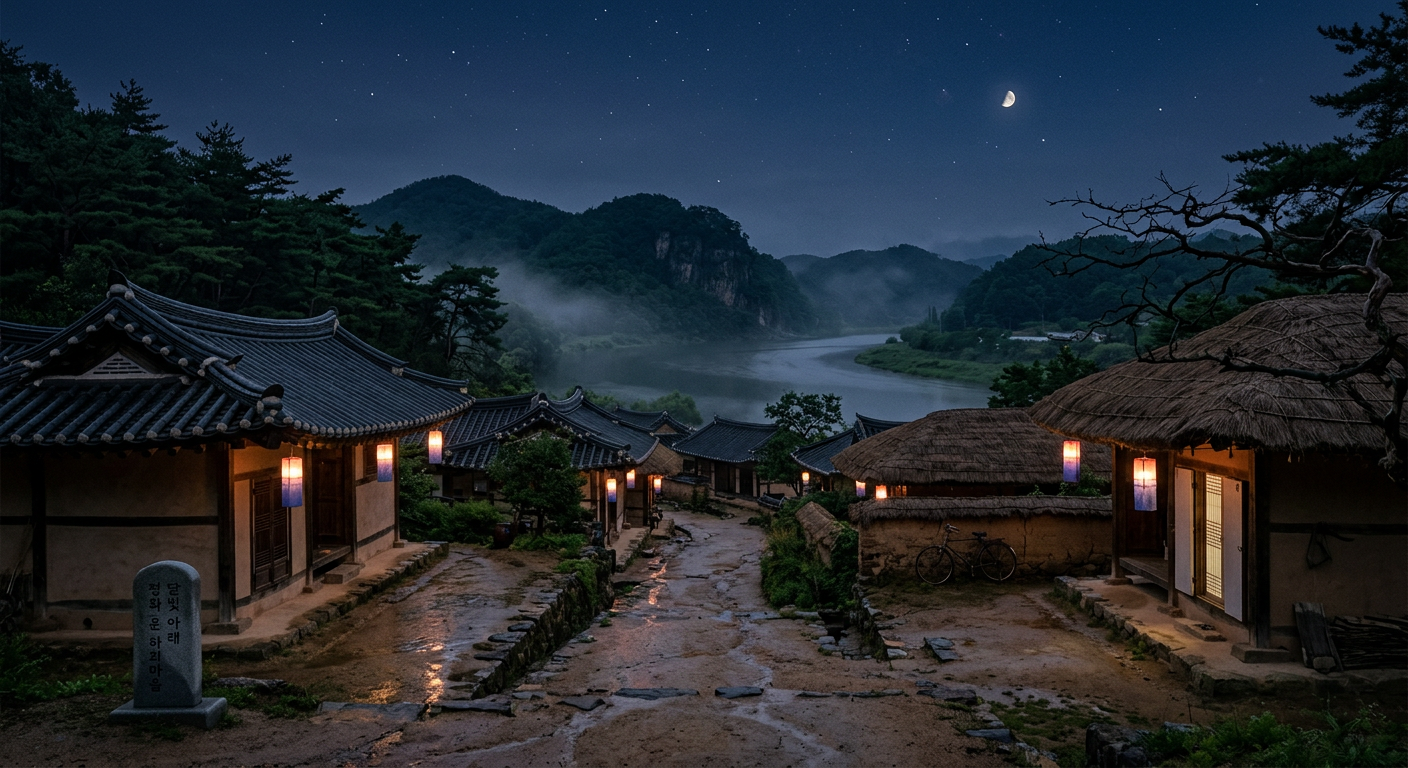
The road into Andong Hahoe Village did not announce itself with neon lights, loud cafés, or a line of people waiting for the same photo. It curved gently toward a village wrapped by the Nakdonggang River, where old tiled-roof houses and thatched homes seemed to sit low against the land. UNESCO describes Hahoe and Yangdong as representative historic clan villages founded in the 14th to 15th centuries, shaped by forested mountains, river views, and agricultural fields. That geography matters because the calm is not decorative; it feels built into the village itself.
Gyeongju is gorgeous at night, especially around illuminated historical sites, royal tomb areas, and palace ponds. The official Gyeongju tourism site even promotes night programs such as illuminated nightscape tours, which explains why many travelers think of Gyeongju when they imagine a Korean heritage night walk. Andong Hahoe Village felt different from the first few minutes. It was not more spectacular than Gyeongju; it was more private, more hushed, and strangely easier to hear.
Arriving in Hahoe felt slower than arriving in Gyeongju
The first thing I noticed in Hahoe was the pace. Gyeongju often feels like a museum city with a wide-open stage, where major sights sit ready for cameras, groups, and night lighting. Hahoe felt like a village that still wanted to be approached carefully. The Korea Tourism Organization explains that Hahoe Village is surrounded by the Nakdonggang River and remains home to descendants of the Pungsan Ryu clan, which gives the place a lived-in feeling rather than a purely display-like mood.
That difference changed my behavior right away. I spoke more quietly. I walked more slowly. I checked where my feet landed because the paths felt like part of someone’s evening, not just a tourist route. Honestly, I did not expect a travel destination to make me lower my voice without anyone asking.
Hahoe’s fame is not small. The official village website says members of the Ryu family have lived together there for around 600 years, and UNESCO lists the village with Yangdong as a World Heritage site. That kind of history can become heavy in a guidebook, yet at night it becomes simple. A wall, a gate, a roofline, and a dark field tell you enough.
In Gyeongju, I often feel pulled from one highlight to another. Cheomseongdae, Donggung Palace and Wolji Pond, Woljeonggyo Bridge, Daereungwon, Hwangnidan-gil; the names pile up quickly. Even when the night is beautiful, there is a quiet pressure to keep moving because something famous waits nearby. In Hahoe, the lack of that pressure was the attraction.
The village did not ask me to complete a checklist. It asked me to notice the sound of gravel under my shoes, the line of a wall in low light, and the way old houses create shadows that modern streets almost never have. That sounds small. It did not feel small there.
Travelers sometimes compare places by the number of famous sights they can pack into one evening. By that standard, Gyeongju wins easily. Yet peace works by another scale. One quiet lane can stay in the body longer than five crowded viewpoints.
Andong is not empty, of course. Hahoe is a known destination, and daytime visitors can be steady. Queen Elizabeth II visited Hahoe on April 21, 1999, and the Korea Tourism Organization notes that the village became even more widely known afterward. Still, the night mood is not the same as the daytime mood. When the buses leave, the village feels like it exhales.
That exhale is what made the arrival memorable. I did not feel the bright excitement I usually feel in Gyeongju. I felt my shoulders drop. Have you ever arrived somewhere and realized the best thing to do was nothing for a while?
The slower arrival also made the village feel more respectful. I was not entering a theme park. I was entering a historic settlement where real homes, cultural memory, and tourism share the same narrow lanes. That awareness shaped the rest of the night.
First impression difference between Hahoe and Gyeongju
| Point | Andong Hahoe Village | Gyeongju at night |
|---|---|---|
| Mood | Quiet, slow, residential | Bright, scenic, active |
| Best pace | One lane at a time | Several landmarks in one route |
| Main appeal | Atmosphere and stillness | Illuminated heritage views |
| Traveler feeling | Like entering a lived-in village | Like walking through an open-air museum |
The best part of Hahoe begins after you stop rushing
Check the village background before planning your night
Hahoe is a UNESCO World Heritage village
UNESCO explains why Hahoe and Yangdong are important historic clan villages in Korea.
Read UNESCO backgroundThe night walk was quiet in a way cities rarely allow
The night in Hahoe was not silent in a perfect, cinematic way. There were small sounds: a dog somewhere behind a wall, the soft scrape of shoes, an occasional car far away, and insects filling the spaces between houses. The quiet had texture. That texture made the village feel alive rather than abandoned.
The shape of Hahoe helps create that feeling. UNESCO describes the village landscape as sheltered by mountains and facing a river and open agricultural fields, reflecting Joseon-era aristocratic Confucian culture and ideas of physical and spiritual nourishment from the surrounding landscape. When I read that later, it made sense of what I had felt before I had words for it. The village does not sit apart from nature; it leans into it.
At night, the river was more presence than view. I could not see every detail, but I could sense the openness beyond the houses. In Gyeongju, light often reveals the monument. In Hahoe, darkness hides just enough to make imagination work.
That was the surprising part. I usually travel to see more. In Hahoe, seeing less made the night deeper. The outlines mattered more than details, and the gaps between houses felt like pauses in a long sentence.
The streets were not designed to entertain me. They were narrow, uneven in places, and modest. The houses did not shout for attention. Their power came from repetition: wall after wall, roof after roof, gate after gate.
A night walk here needs restraint. Loud talking feels wrong. Flash photography feels too harsh. Even walking too quickly feels like missing the point. The village rewards gentle behavior.
This is where Hahoe felt more peaceful than Gyeongju for me. Gyeongju’s night beauty is often arranged around lighting, reflections, and iconic viewpoints. Hahoe’s night beauty is quieter because it is less arranged. It asks the traveler to adjust, not the other way around.
The calm also came from fewer choices. In Gyeongju, I catch myself checking maps every few minutes because the next famous stop might be close. In Hahoe, I put the phone away more easily. A 30-minute walk felt fuller than a 3-hour route.
That does not mean Hahoe is better for every traveler. Someone looking for bright night photos, cafés, late snacks, and lively streets may prefer Gyeongju. Someone wanting a low-voice, slow-footed, old-village evening may find Hahoe unforgettable. Peace is a preference, not a ranking.
Still, the quiet hit me harder than expected. I remember stopping near a wall and doing absolutely nothing. No photo. No note. No search. Just standing there felt enough.
💡 Travel note
A quiet village night works best when you prepare during the day. Check your accommodation location, dinner options, transport, and village rules before sunset. Once it gets dark, the charm comes from not needing to solve practical problems. The fewer errands you have at night, the more peaceful Hahoe feels.
Gyeongju shines beautifully, but Andong breathes differently
I love Gyeongju at night. The city knows how to use darkness well: water reflections, lit bridges, glowing ruins, and long walking paths that turn history into scenery. The official tourism site promotes Gyeongju as a place with nightscape programs, walking tours, and major tourist complexes, which matches the city’s polished travel appeal.
Gyeongju’s strength is that it gives visitors a clear route. You know where to stand. You know what to photograph. You know when the lights come on. It is generous in a very visual way.
Andong Hahoe Village does not compete well on that same stage. It is not trying to be a night-view course. Its strongest moments are not always photogenic. Some of them are too dark, too plain, or too quiet to explain well on social media.
That is exactly why I found it more peaceful. Gyeongju made me want to take one more picture. Hahoe made me want to walk without proving I had been there. That difference sounds emotional, but travel is emotional.
There is also the matter of scale. Gyeongju has the feeling of a historic city, with famous sites spread across a broader urban landscape. Hahoe is a village, and that smaller scale changes the body. You do not need to conquer distance; you need to settle into the place.
The Korea Tourism Organization calls Hahoe one of Korea’s most famous folk villages and notes its connection to the Ryu clan of Pungsan. That clan-village identity gives Hahoe a different kind of depth from Gyeongju’s ancient capital atmosphere. Gyeongju is grand history. Hahoe is inherited daily life.
A traveler can enjoy both without forcing a winner. Gyeongju is better for a full itinerary, landmark photography, and first-time heritage travel. Hahoe is better for a reflective night, traditional-house stay, and the feeling that time has loosened a little. Those are different gifts.
The cost of that peace is convenience. Hahoe needs more planning, especially if you stay overnight. Late-night transport may be limited, restaurants may close earlier than expected, and the village mood is not built around nightlife. A taxi fare or extra night in Andong may feel annoying, but the calm is the reason you came.
If you only have one night and want guaranteed beauty, Gyeongju is easier. If you want a night that feels like stepping out of the tourism current, Hahoe is stronger. That was the comparison that stayed with me.
So yes, Hahoe felt more peaceful than Gyeongju. Not more famous. Not more convenient. Not brighter. More peaceful, in the plain and lasting sense of the word.
Which night fits your travel style?
| Traveler type | Better fit | Reason |
|---|---|---|
| First Korea heritage trip | Gyeongju | More landmarks and easier routes |
| Slow travel lover | Andong Hahoe | Quiet lanes and village atmosphere |
| Night photo hunter | Gyeongju | More illuminated viewpoints |
| Hanok stay seeker | Andong Hahoe | Overnight mood matters most |
Do not choose Hahoe for nightlife
Choose it when you want the night to become quiet
Compare with Gyeongju’s official night travel options
Gyeongju’s tourism site lists nightscape and walking-tour style programs for travelers who want a brighter evening.
Visit Gyeongju tourismStaying overnight changed the whole village
Hahoe is beautiful as a day trip, but staying overnight changes the meaning of the place. Daytime brings movement, guides, ticket checks, photos, and the normal rhythm of visitors arriving and leaving. Night removes much of that surface. The village becomes less about attractions and more about presence.
A hanok-style stay in or near Hahoe gives the evening a natural shape. You check in, eat before it gets too late, take a slow walk, return to a quiet room, and sleep with the sense that the village has settled around you. It is not luxury in the hotel sense. It is luxury in the attention sense.
The practical side needs care. The Hahoe tourist information center is listed by Andong tourism as operating from 10 AM to 5 PM, so travelers should not assume they can solve every question late at night. That operating window alone says something about the rhythm of the destination. It is better to ask questions earlier in the day.
Dinner planning matters too. In a busy district of Gyeongju, you can often improvise. Around Hahoe, improvising late can become stressful. Eat earlier than you think, carry water, and do not expect a café-filled evening.
The reward is a night without pressure. No loud entertainment. No crowded shopping street. No need to chase the next stop. Just the slow sensation of being in a place whose main attraction is not speed.
That calm became strongest after I returned to my room. The air outside felt cool, the walls held the day’s warmth, and every sound seemed sharper. I heard my own bag zipper too clearly. It made me laugh quietly because even packing felt noisy there.
A village night also changes how morning feels. In Gyeongju, morning often begins with another plan. In Hahoe, morning can begin with mist, quiet paths, and the feeling that you have already been given the best part before the day starts. That is hard to measure, but easy to remember.
If the budget allows, one night is worth considering. A day trip shows the village. An overnight stay lets the village change. Those are not the same experience.
Of course, not every traveler needs to sleep there. Some people may prefer staying in central Andong and visiting Hahoe during the day. That gives more food and transport options. Yet for quiet-night travelers, staying close is the key.
The peacefulness did not come from doing more. It came from removing options. A 1-night stay can cost more than a quick visit, but the extra cost buys slowness. For this village, slowness is the main view.
💡 Stay tip
Book lodging after checking whether it is inside the village, near the village, or in central Andong. Those three choices create very different nights. Inside or near Hahoe gives the quietest atmosphere, while central Andong gives easier food and transport. The peaceful choice and the convenient choice are not always the same.
My small mistake made the silence feel even bigger
My mistake was simple: I arrived too casually. I thought a village known for peace would be easy. Peaceful places are not always easy. Sometimes they need more preparation because they offer fewer backup options.
I had not eaten properly before arriving. I assumed I would find something nearby, then realized the area did not work like a late-night city neighborhood. The quiet that felt magical ten minutes earlier suddenly felt a little inconvenient. My stomach was louder than the village.
That sounds funny now, but at the time I felt embarrassed. I had come for a peaceful night and immediately turned it into a food problem. I walked around with that anxious traveler mood, checking maps, wondering what was open, and feeling my calm leak away. Honestly, it was such a beginner mistake.
The moment passed once I accepted the situation. I ate what I had, stopped searching, and went back outside. The village was still there, still quiet, not caring about my poor planning. That made the silence feel even bigger.
Travel failures often reveal the character of a place. In Gyeongju, a mistake can be solved by another café, another taxi, another bright street. In Hahoe, the solution was to calm down. That was uncomfortable, then strangely useful.
I learned to treat Hahoe like a slow village, not a flexible city stop. Arrive earlier. Eat earlier. Ask earlier. Walk later. That order makes the night gentle.
The failure also made me more respectful. People live in places like this. A traveler’s desire for convenience should not override the village’s rhythm. Late noise, careless walking, and intrusive photography feel different in a living heritage village than in a tourist plaza.
That night I became more careful with my phone light. I avoided pointing the camera toward private homes. I walked away from darker residential corners instead of treating every lane as open scenery. Peace needs manners.
The mistake ended up improving the trip. Once I stopped trying to control the night, I began receiving it. A low wall, a narrow lane, and the cool air became enough. I did not need a perfect itinerary.
That is why Hahoe stayed with me. Not because everything was convenient. Because the inconvenience protected the quiet. Sometimes travel gets better when the place refuses to become exactly what you expected.
Direct experience
I arrived thinking the night would take care of itself, then realized I should have planned dinner and transport earlier. For a few minutes, I felt irritated and embarrassed, especially because the village was so calm and I was the only restless thing in it. After that, I stopped treating Hahoe like a city itinerary. The night became much better once I matched its pace instead of pushing my own.
A calm travel plan makes Hahoe easier to enjoy
A quiet Hahoe night works best with a very simple plan. Arrive before sunset, settle practical matters, eat early, then walk slowly after the village becomes calm. Do not leave basic decisions until the atmosphere is already dark and still. That is when small problems feel bigger.
Check the official tourism information before going. The Korea Tourism Organization page gives the basic introduction, while Andong tourism lists local tourist information resources, including the Hahoe Folk Village Tourist Information Center. Official sources are useful because opening hours, access rules, and visitor guidance can change by season or local operation.
Transport deserves attention. If you do not drive, check the latest bus or taxi situation before your visit rather than assuming frequent late service. Hahoe sits outside central Andong, and that distance feels larger at night. A quiet village is wonderful until you are stranded without a plan.
The walking plan should stay modest. You do not need to cover every corner. In fact, trying to cover every corner can ruin the mood. Pick a gentle loop, respect private spaces, and let the village remain partly unknown.
Bring a small flashlight or use a low phone light only when needed. Avoid shining light into homes or windows. Wear comfortable shoes because old village paths are not the same as polished city pavement. The details sound boring until they save the evening.
Weather changes the experience a lot. A dry autumn night may feel crisp and perfect, while a humid summer night can feel heavy with insects and river air. Spring can be soft, winter can be beautiful but cold. Pack for standing still, not just walking.
If you are comparing Hahoe with Gyeongju, choose based on energy. Tired from cities, crowds, and bright schedules? Hahoe may feel healing. Want landmark views, easy food, and stronger night lighting? Gyeongju is probably safer.
For me, the ideal route would be one night in Andong Hahoe and another night in Gyeongju, not one instead of the other. Hahoe gives quiet. Gyeongju gives glow. Korea’s heritage travel becomes richer when both moods have space.
A final practical note: Hahoe is not only a backdrop. It is a village with residents, cultural value, and fragile atmosphere. The best traveler behavior is simple: lower your voice, keep to appropriate paths, avoid intrusive photos, and leave the place calmer than you found it.
That is the real reason I would return. Not for a dramatic night view, not for a packed itinerary, and not for a louder story. I would return for the quiet lane where nothing much happened, because that was the whole point.
Simple Hahoe night checklist
| Step | What to do | Why it helps |
|---|---|---|
| Before sunset | Arrive and confirm lodging | Reduces night stress |
| Early evening | Eat or buy essentials | Avoids late inconvenience |
| Night walk | Keep the route short and quiet | Protects the village mood |
| Photography | Avoid private homes and harsh light | Shows respect for residents |
| Departure | Check transport in advance | Prevents being stuck late |
⚠️ Caution
Hahoe Village is a historic residential heritage village, not only a sightseeing set. Some homes and lanes may be private or sensitive, especially at night. Follow local signs, avoid loud voices, do not point strong lights into houses, and check current visitor information before traveling. Rules, access, transport, and operating hours can change by season or local management.
A peaceful night needs practical planning
Check Andong tourist information before you go
Use Andong’s official visitor resources
Andong tourism lists Hahoe-area visitor information, guide resources, and local travel support.
Check Andong tourist infoFrequently Asked Questions
Q1. Is Andong Hahoe Village really more peaceful than Gyeongju?
A1. Andong Hahoe Village can feel more peaceful than Gyeongju because it is smaller, quieter, and more residential in atmosphere. Gyeongju is better for illuminated landmarks and night sightseeing routes, while Hahoe is better for slow walking and stillness.
Q2. Is Hahoe Village worth staying overnight?
A2. Staying overnight is worth it if you want the quietest version of Hahoe. Day trips show the village’s architecture and history, but a night stay reveals the calm after most visitors leave. Plan dinner and transport early.
Q3. What makes Hahoe Village historically important?
A3. Hahoe is historically important as one of Korea’s representative clan villages, founded in the Joseon period and recognized by UNESCO together with Yangdong. UNESCO highlights its river, mountain, village layout, and Confucian cultural background.
Q4. Is Hahoe good for night photography?
A4. Hahoe is better for atmospheric photography than bright night-view photography. Travelers looking for illuminated bridges, ponds, and iconic night scenes may prefer Gyeongju. In Hahoe, respect for residents matters more than getting the perfect shot.
Q5. Can I visit Hahoe Village as a day trip?
A5. Yes, Hahoe can be visited as a day trip from Andong. A day visit is easier for transport, meals, and guided information. An overnight stay is better for travelers who want silence, slow walking, and a traditional village mood.
Q6. What should I prepare before a Hahoe night walk?
A6. Prepare food, transport, lodging details, comfortable shoes, and a low light source before sunset. The tourist information center is listed as operating from 10 AM to 5 PM, so questions are easier to solve earlier in the day.
Q7. Is Gyeongju still better for a first trip to Korea?
A7. Gyeongju may be better for a first heritage-focused trip because it offers more famous landmarks, night views, and convenient tourist routes. Hahoe is better as a slower, more reflective stop. The best choice depends on your travel energy.
Q8. Are people still living in Hahoe Village?
A8. Yes, Hahoe is not just a preserved display village; it has a living community and deep clan-village history. Korea Tourism Organization notes that descendants of the Pungsan Ryu clan still make up a significant part of the village.
Q9. What is the best way to compare Andong and Gyeongju?
A9. Compare Andong and Gyeongju by mood rather than fame. Gyeongju is bright, spacious, and landmark-rich, while Andong Hahoe is quiet, intimate, and village-centered. Both are valuable, but they satisfy different kinds of travel.
Q10. What is the biggest mistake to avoid in Hahoe?
A10. The biggest mistake is arriving late without food, transport, or lodging details confirmed. Hahoe’s peacefulness depends partly on its slower rhythm, so convenience can be limited at night. Prepare early, then let the village stay quiet.
'Tour in Korea' 카테고리의 다른 글
| Top 10 Must-Visit Mountains in Korea (2) | 2024.10.14 |
|---|---|
| How to Get from Incheon Airport to Myeongdong, Seoul (1) | 2024.09.19 |
| Exploring Hongdae (홍대) in Seoul: A Guide to Must-Do Activities (3) | 2024.08.23 |
| Exploring Myeongdong (명동), Seoul: Top Activities and Attractions (0) | 2024.08.22 |
| Best Tourist Attractions in Seoul (서울) for a Perfect Visit (0) | 2024.08.19 |


