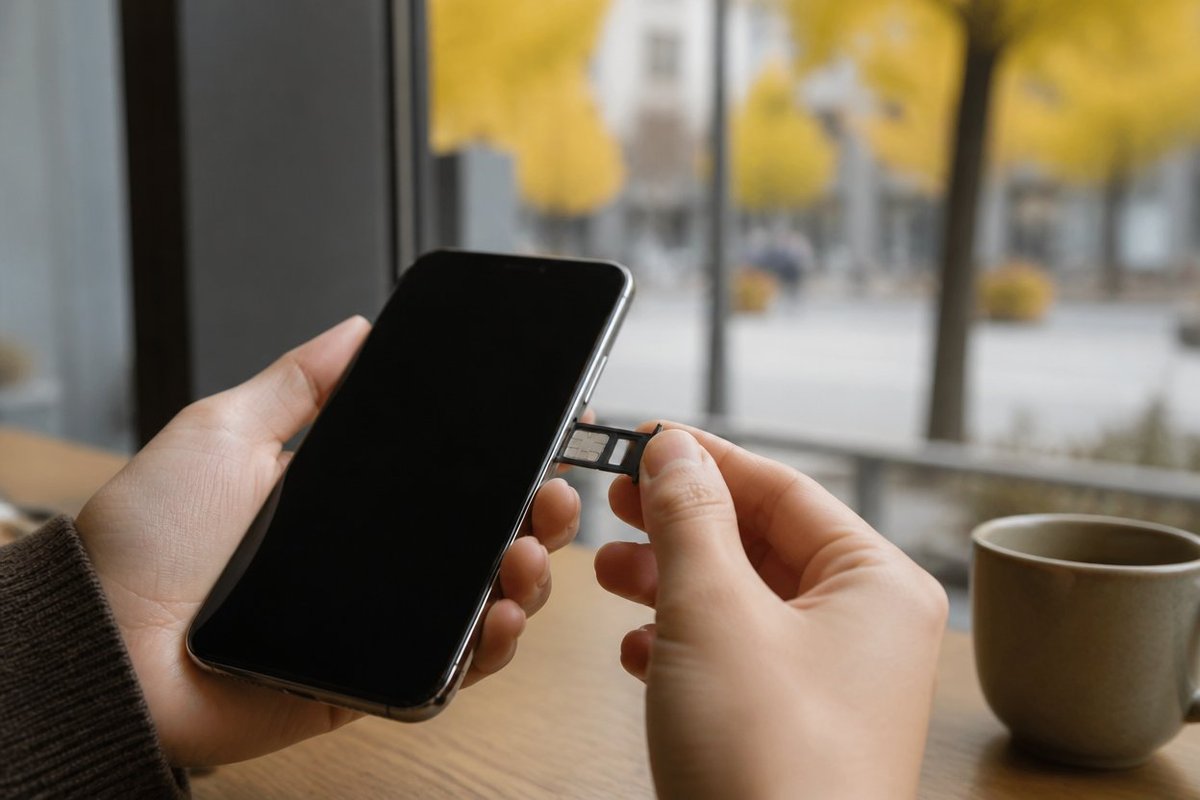
A Korean phone number is more than a way to call people.
You can start with a prepaid SIM or eSIM using only your passport, but a postpaid plan in your own name generally needs your Residence Card, and that registered line is what unlocks identity verification for banking, delivery apps and government websites.
So the real question for a resident is not which plan is cheapest this month.
It is how fast you can get a number that Korean apps accept as you.
Our family has set up lines for visiting relatives and for students staying several years, and the two cases call for different choices.
Carrier rules and prices change often, so confirm the details with the carrier before you sign.
What phone options do foreigners have in Korea?
There are four realistic choices, and most long-term residents move through two of them.
| Option | ID usually needed | Works for identity verification? | Best for |
| Travel eSIM, data only | None or passport | No | The first few days |
| Prepaid SIM with a Korean number | Passport | Often not | The weeks before your card arrives |
| Postpaid plan from a major carrier | Residence Card, usually a Korean bank account or card | Yes | Residents who want store support |
| Postpaid plan from a budget carrier | Residence Card, usually a Korean bank account or card | Yes, when you choose the budget carrier option on the screen | Residents who want a lower bill |
The three major carriers are SK Telecom, KT and LG U+.
Budget carriers, called 알뜰폰 in Korean and MVNOs in English, rent those same networks and sell cheaper plans.
Coverage is the same network either way.
What differs is price, customer service and how much English help you get.
Can I get a Korean phone number with only a passport?
Yes, for prepaid service.
Airport counters and carrier shops sell prepaid SIMs to passport holders, and the line works for calls, texts and data.
The catch is verification.
Korean identity verification is tied to a 13-digit registration number, which a passport does not have.
A passport-registered prepaid line is a working Korean number that many apps will still refuse when they ask you to prove who you are.
Carriers also put conditions on passport-opened lines, such as limits on how many you can hold and how long they stay active without further checks.
Ask the shop exactly what will happen to the line after your first months.
What do I need for a postpaid plan?
Bring your Residence Card, your passport, and a Korean bank account or card for the monthly payment.
The remaining period of stay on your card matters.
Carriers look at it when deciding on contracts and device installments, and a card that expires soon can mean a deposit or a refusal for installment plans.
If you only need the SIM and already own an unlocked phone, the process is simpler.
Tell the staff you want a SIM-only plan with no contract.
That keeps you free to switch carriers later and take your number with you.
Are budget carriers a good choice for foreigners?
For most students and residents we know, yes.
The plans are noticeably cheaper than the major carriers for the same data.
Many budget carriers let Residence Card holders sign up online and activate the SIM themselves, and some sell SIM cards through convenience stores.
The weak points are support and language.
Help is mostly by chat or phone in Korean, and there are few walk-in shops.
If your Korean is limited, a carrier or reseller that advertises service for foreigners is worth a slightly higher price.
Compare current plans on each carrier's official site, since prices and promotions change monthly.
Why does the name on my phone contract matter so much?
Because every Korean app that verifies your identity checks three things against the carrier's records: your name, your date of birth and your phone number.
If the carrier typed your name differently from your Residence Card, verification fails.
The usual culprits are name order, a missing middle name, spaces and lowercase letters.
Ask the staff to enter your name exactly as it is printed on the card, in capital letters, and to show you the screen before they finish.
Then give the same spelling to your bank.
Fixing a mismatch later means visiting both the carrier and the bank.
Koreans rarely face this problem because their names are short and standard in form, something MARU touches on in its look at Korean surnames.
How do I get through the weeks before my Residence Card arrives?
Use a prepaid SIM or an eSIM for data and maps.
Keep your home-country number alive on roaming or Wi-Fi calling for bank codes from home.
Use apps that accept foreign cards or passport-based sign-up where they exist.
Some carriers and resellers sell a prepaid plan that converts to postpaid when your card arrives, which saves you from changing numbers.
If you change numbers later, update the bank, the school and the immigration record.
What happens at the shop?
Official carrier stores and authorized dealers both sell plans, and the signs look similar.
An official store is the safer choice for a first contract.
The staff copy your ID, check it against the system, and ask you to choose a plan.
Read the contract length, the monthly price after any discount period ends, and the penalty for cancelling early.
Discounts that depend on a 24-month commitment are common, and so are bundled extras that you can decline.
If you do not understand a line, ask them to write the monthly total and the contract end date on paper.
| Check before you sign | Why |
| Name spelling on the contract | Identity verification depends on it |
| Contract length | Early cancellation can cost money |
| Price after the promotion ends | Discounts often last only some months |
| Device installment or SIM only | Installments tie you to the carrier |
| Payment method | Automatic payment needs a Korean account or card |
| Add-on services | Optional paid extras can usually be removed |
Which apps should I set up first once the line works?
KakaoTalk comes first, because schools, landlords, delivery drivers and friends all use it.
MARU has a fun explanation of how Koreans use it in its piece on KakaoTalk habits.
Next is your bank's app, then a map app, then the carrier's own app for checking data use and bills.
The verification app run by the three carriers, called PASS, is worth installing early, since many websites send their identity check through it.
What should I do with the line when I leave Korea?
Cancel it properly.
An unpaid phone bill left behind can follow you if you return, and an abandoned line in your name is a security risk.
Visit the store or call the carrier before your departure date, pay the final bill and keep the confirmation.
If you are on a contract, ask what the cancellation charge will be so that it is not a surprise.
Frequently asked questions
Can I get a postpaid plan without a Residence Card?
Generally no; postpaid contracts are built around the Residence Card, so use prepaid until it arrives.
Will a prepaid SIM work for Korean bank apps?
Often it will not, because a line opened on a passport usually cannot pass identity verification.
Are budget carriers slower?
They use the major carriers' networks, so coverage is the same, though plan terms differ.
Can I keep my number if I switch carriers?
Yes, number portability is standard in Korea, as long as the line is in your name and has no unpaid balance.
Do I need a Korean bank account first?
For most postpaid plans you need a Korean account or card for automatic payment, so many newcomers open the bank account right after receiving the card.
Sources: HiKorea (hikorea.go.kr) Residence Card information; 2026 subscription guides for foreign customers published by Korean carriers and resellers; requirements vary by carrier and store, so confirm on the official site of SK Telecom, KT, LG U+ or your budget carrier.
'Banking & Phone' 카테고리의 다른 글
| How to Open a Bank Account in Korea as a Foreigner: Documents and the Transfer Limit (0) | 2026.11.16 |
|---|
